Your AI habit has a carbon footprint. I built a tool to track it.
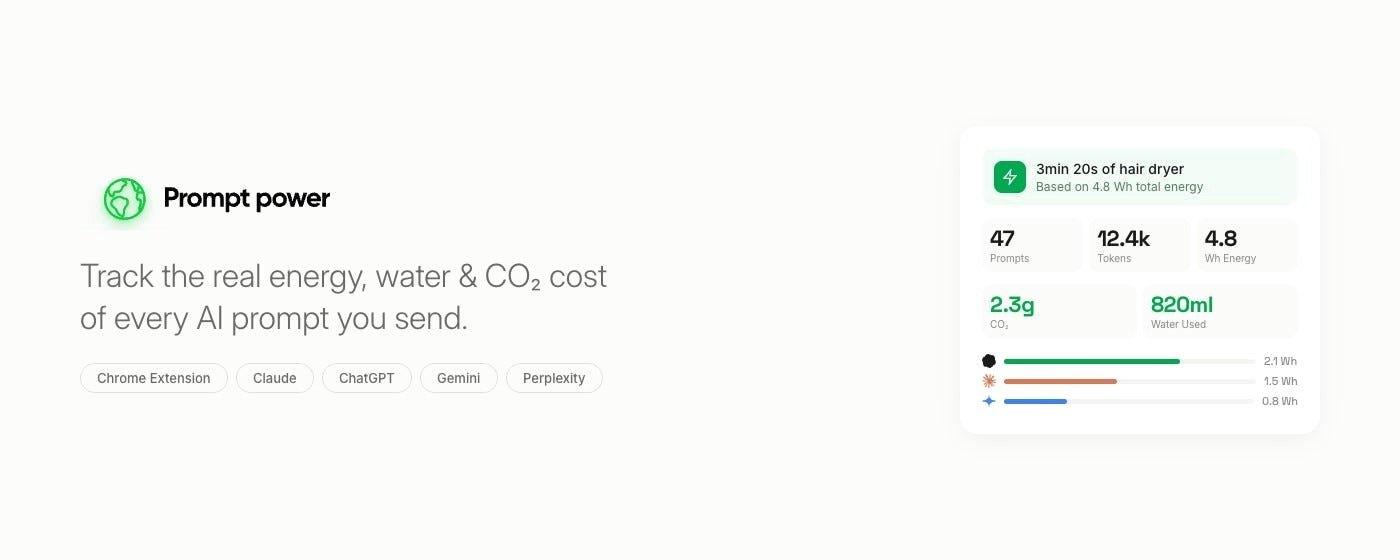
A Chrome extension that shows the energy, water and CO₂ behind every prompt you send to Claude, ChatGPT, Gemini and Perplexity.
Why
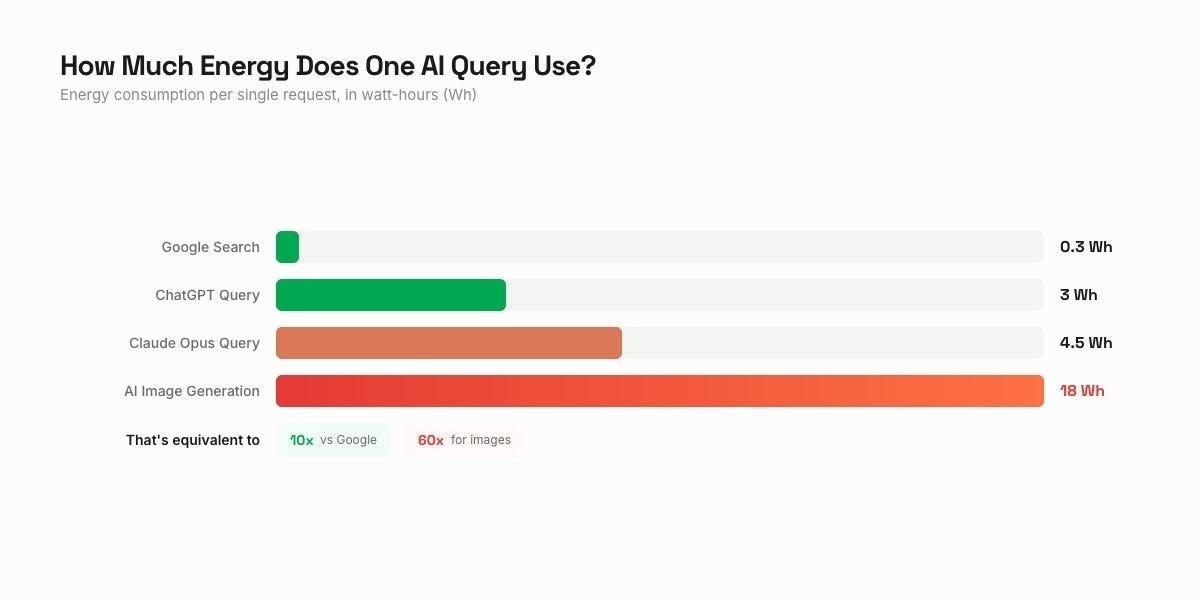
A ChatGPT query uses about 3 Wh, ten times a Google search. Generating an image uses about 18 Wh. I looked that up mid-project, sat with it for an hour, and six hours later the extension was on the Chrome Web Store.
Translate, don’t inform
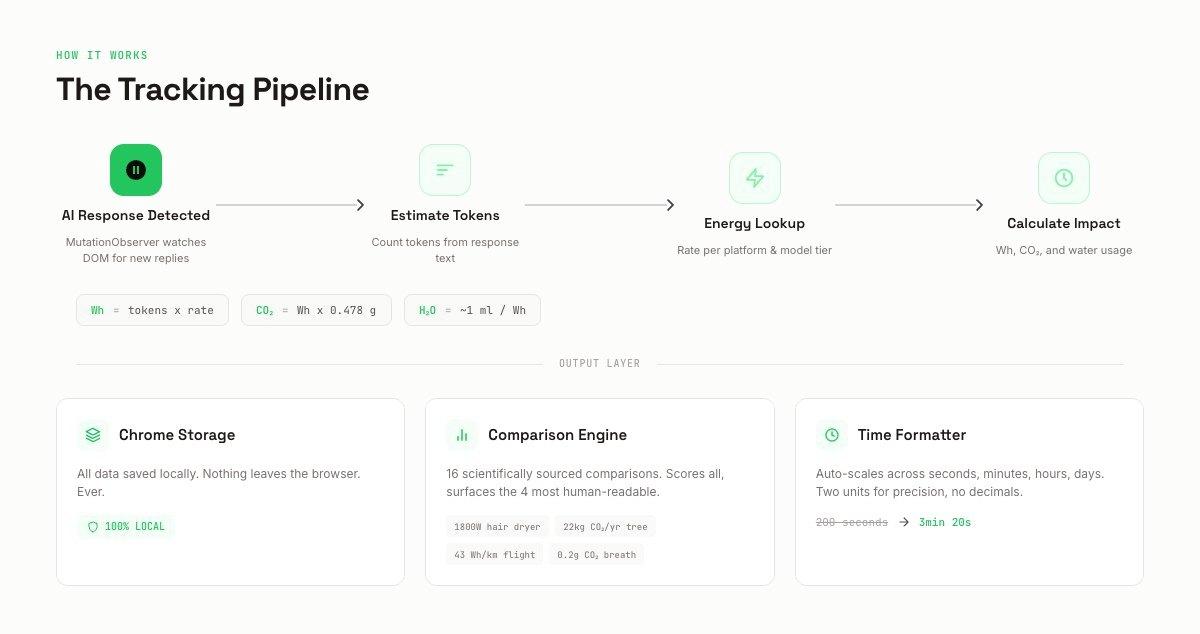
Nobody has a mental model for watt-hours. “4.8 Wh today” means nothing; a hair dryer for 3 minutes 20 seconds does. The extension picks from 16 real-world equivalents, each backed by a real power rating or emission factor, and shows the ones that land on readable numbers.
Grounded numbers
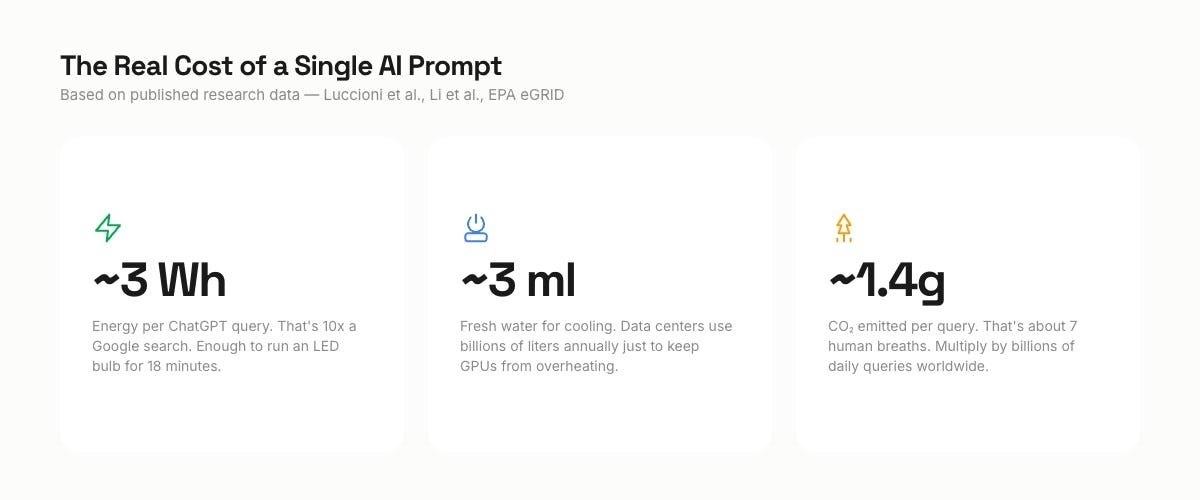
Energy comes from Luccioni et al., water from Li et al. (about 1 ml per Wh of cooling), CO₂ from the EPA’s eGRID (0.478 g per Wh). Not exact for every data centre, but the order of magnitude is right, and that is what awareness needs.
Small decisions
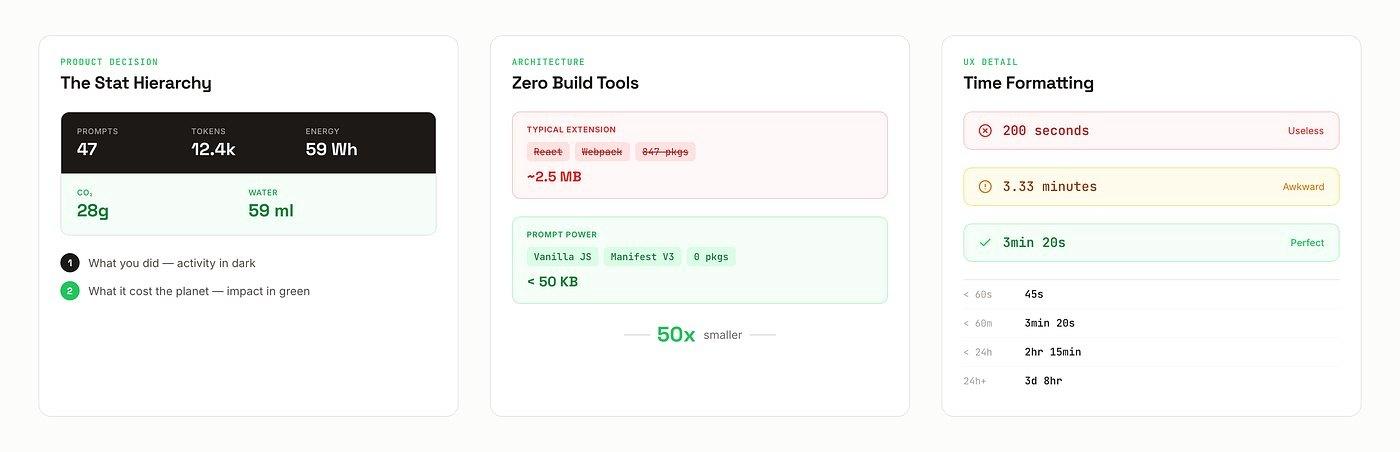
What you did sits in black, what it cost the planet in green, so the eye pauses on the second row. No build tools: vanilla JS, under 50KB. And time always reads in two units, “3min 20s”, never “200 seconds”.
How it works
A content script on each platform watches for new replies, estimates the tokens, looks up the rate for that model, and works out energy, water and CO₂. Everything is stored locally. Nothing leaves the browser.
Five directions first
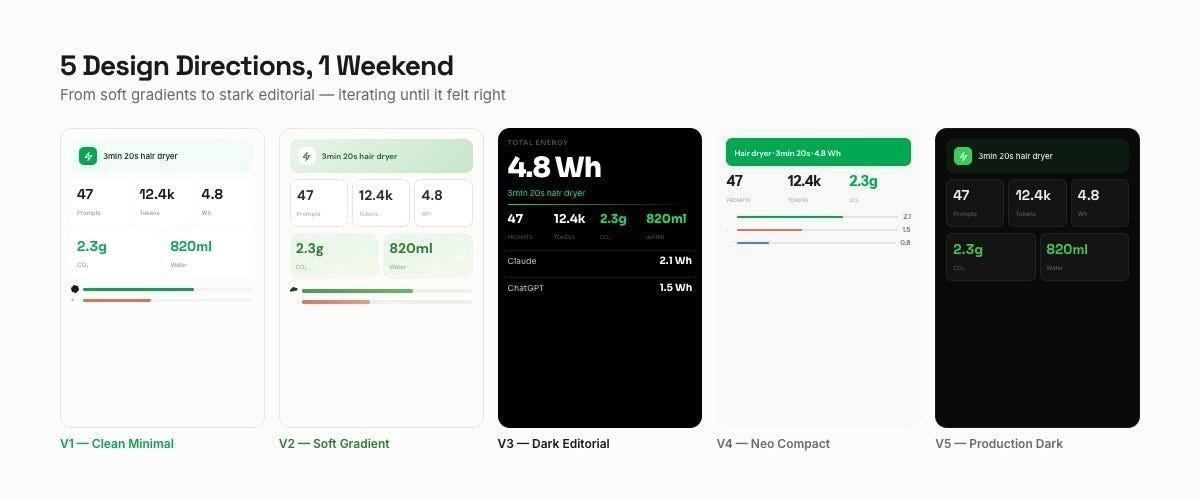
A Chrome popup is 400px wide, so every pixel has to justify itself. I explored five visual directions before landing on one. It looks obvious now, but only after four wrong answers.
Numbers
- 59 Wh
- 28 g
- 59 ml